Space Between Stars
I watched the blue sphere of our home world shrinking into the distance. I tried to appreciate the beauty of our home world, knowing I would never see it again.
Blankspace is a psychological horror LARP by Fractured Reality. Recently I was fortunate enough to play their most recent English-language run, where I had a fantastic experience. The game dealt with a lot of heavy topics, telling a story about personal struggle and growth in a retro sci-fi setting filled with surrealism and metaphor.
I’m going to talk a bit about the game and my experience there, but if you are curious I’d recommend checking out their (gorgeous!) website for more information. Overall it was a very emotionally intense experience that I’d say is not for everyone but definitely special.
For a bit of context, LARP stands for Live Action Role Play, and is a type of game where you physically role play as a character. There are many different genres of LARP, each with their own origins and history. Blankspace is influenced by Nordic and Modern German styles, which emphasize collaborative storytelling, emotional intensity, and minimalist rules.
Setting and Mechanics
“You may have heard many things or developed expectations about your new home,” the AI avatar explained in a monotone voice to the room of hopefuls. “You are all wrong.”
The game has a retro sci-fi setting, taking a lot of inspiration from dystopian visions of the future circa the 1980s. In this gloomy future, the entire Earth has become industrialized and nature all but gone. The technology is roughly familiar, with a big exception of space travel and time manipulation. People spend their lives working monotonous jobs, eating bland fast food, and living in grey cities to make the elite even more powerful.
However, there is a beacon of hope: Eos. It’s a colony in a distant part of space, and promises a new beginning in a new world. Travel there is heavily restricted, with only an AI acting as emissary and selecting a lucky few each year to take the long and dangerous trip. Despite ships being lost, many still dream of going there.
In this game, you portray one of 36 people fleeing their past and trying to have a new beginning. What exactly they struggle with is different, but they are clustered into groups of four people with a common theme. Despite the characters attempting to have a new start, the past catches up with them in the form of a monster made of their own fears and trauma. To quote the designers:
Through the metaphor of horror, the larp aims to explore how we deal with the shadows of our past: Do I run away? Do I face my demons? How long can I look away? Is there any hope of forgetting? Can I make amends? Am I a different person? Can people ever change at all?
Shadow Play
The LARP utilizes two major mechanics to explore the themes of the past. The first is called shadow play. A lot of games create pre-existing relations that you play out in the course of play. These relations may have secrets or hidden depth, but you both play in the shared reality of the game world and connection.
Blankspace has a rather unique spin where some relations have an additional symbolic layer called the shadow relation. This represents what another character reminds yours of- it can be a distant parent, an abusive ex, or even something abstract like the child you never had. This shadow relation is not known by the other character, just something that influences your roleplay. They may have their own shadow relationship with you, but not always.
For example: Your character has a dear friend that is also a shadow relation of their dead mother they never said goodbye to. At lower intensities, they remind your character of that person in a vague way. But that shadow relationship can escalate until you are acting as if they are your actual mother and completely ignoring how impossible that is.
When engaging in shadow play, you focus on the emotions of the relationship and less on facts so you both can interact from entirely different realities at once. If you hear something that doesn’t fit, you just ignore it and instead listen to the feelings behind the words. But despite the different realities, actions taken in shadow play are still real. If your character lashes out at their shadow mother, their friend still has bruises afterwards.
I screamed at her, “You’re not trying to help me, you’re just making me into a copy of you! You don’t give a damn about what I want, you never even bothered to ask!”
I saw what she really was, another disappointed mentor who never cared about me. She started talking to me about betrayal, but I couldn’t stand to hear any more of her excuses. I grabbed her and just hit her as hard as I could until she was on the ground sobbing. It didn’t matter- I knew she was going to leave me anyway. They all did.
The Monster
Another mechanic emerges later in the game, the monster. It is a walking manifestation of every character’s negative inner voice: their guilt, self-loathing, fear, or whatever other things that haunt them given form and a voice. The monster is a non-player character that at the latter parts of the game can be in parts of the ship.
Encounters with it can be terrifying: you cower and hide, trying to be as small and as quiet as you can when you see the red light and hear the alien insectoid noises as it comes near. Your character knows instinctively that they can’t look at the monster, adding tension as its exact appearance is unknown and you’re always unsure if it’s still there.
As you see more of the monster, it also sees more of you. It starts to whisper in your ear, telling you negative thoughts and feelings personalized for your character’s struggles. It encourages suffering and pain, pushing you towards your character giving up or doubling down on their toxic traits. Every encounter with the monster changes your character- sometimes for the better as they confront their worst traits, but also for the worst as they retreat harder into denial.
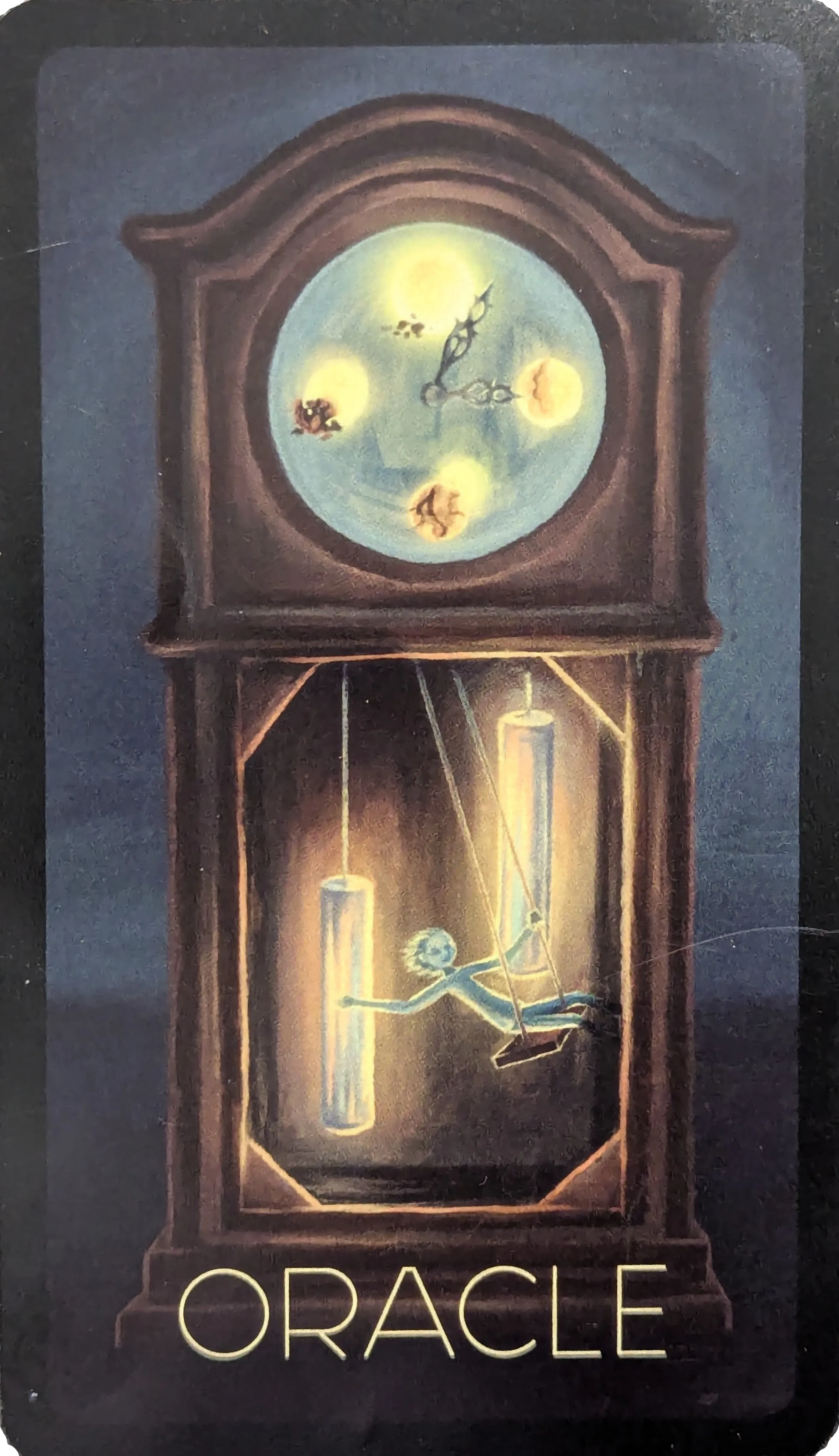
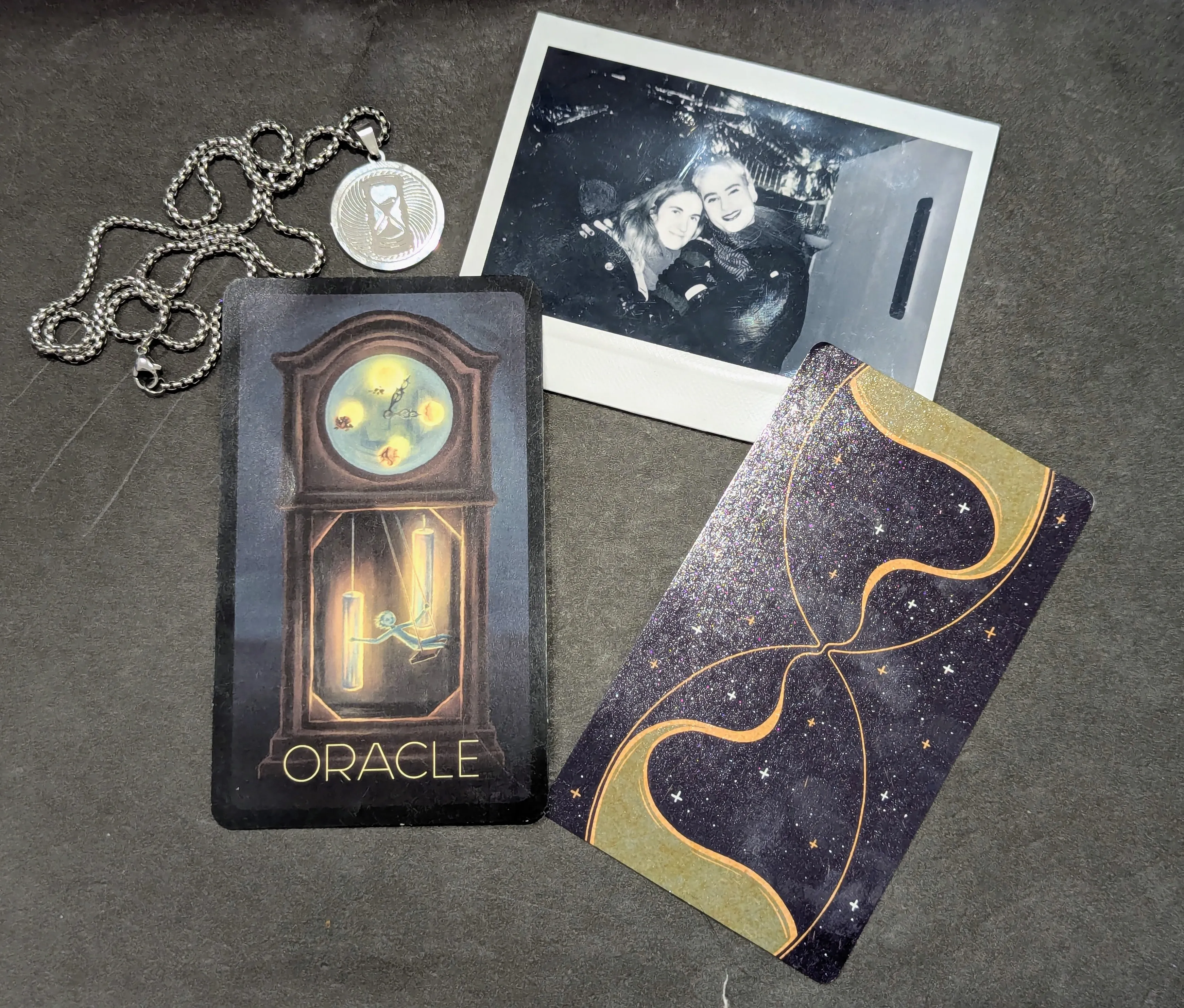
In the final act of the game, you can choose to look the monster in the eye as they come to face their worst self. If you do so, the monster gives you a card with artwork associated with your character. If your character cannot break their pattern and change for the better, you find a quiet space and tear the card in half as a representation of your character committing suicide. Notably, you are forbidden to portray the act, and only can leave the torn card and lay there till found. The point here is not to romanticise suicide, but for the sudden loss to cause ripples in your group and other connections. Even the most toxic characters have someone on the ship who cares for them and will mourn their loss.
The being whispered in my ear as I huddled in fear: “It’s not a cycle, it’s a chain. It’s strangling you. Break it. You’re not helping: you’re making things worse for everyone.” Tears streamed down my face as the terrible voice filled the newly torn hole in my heart. Maybe it’s better for me to just stop helping people. They don’t deserve me anyway.
Atmosphere
The game is set on an old space ship on its last voyage, the Enkidu. The ship is dark and gloomy, with dim lights and long winding corridors you often find yourself alone in. This is accomplished in no small part due to the location, a Cold War era bunker in Germany. The bunker had three levels, spanning areas such as the engine room, hanger bay, mess, bridge, and other places. The space was filled with old equipment dating between the 70s and the 90s, significantly adding to the retro feel.
Each location had props, lighting, and a soundscape specifically designed to add to the mood. As the game went on things became darker and the sounds more ominous. One of my favorite locations in the game was the fuel depot- it was incredibly creepy and had long dark corridors with a metal catwalk floor and massive tanks that rang loudly when hit.
Darkness was also a big part of the game. Players were told to not bring any glowing or highly reflective costuming, so the darkness can be intense. Certain scenes used that extensively, notably a “therapy” scene done by the helpful AI inside an airlock. I stood there in complete darkness breathing into a mask as I talked with it about my utter insignificance to the universe over a radio.
The central area of the ship was the hangar, a large room with screen and various old equipment and the observation deck overlooking it. A view of space was projected onto the screen, and for various points in the game we all gathered there to witness events. The view was amazing, as the organizers created custom CG videos of Earth vanishing into a dot, and a really cool flyby of a black hole complete with light warping in the extreme gravity.
Inside the ship were a few notable areas, such the Core, Stasis Chamber, and Time Prison. The Core was a special place where the faster-than-light drive lived. It was a gorgeous prop made of mirrors that moved and changed colors in a hypnotic way, and warped reality to make shadow play go to its maximum level. A few rooms past that was the stasis chamber, a large room with adjustable glowing racks for every character. It was where the different acts of the game began and ended as the ship jumped through space.
Off the stasis room was the time prison. That was a place that people could be put to spend time in complete sensory deprivation, their mind aware and experiencing a time differential that made minutes in the real last hours or even days. The room was pitch black with a thick door and when active a disturbing droning noise played. The actual time inside was between 4 and 10+ minutes, with the exact time optionally not revealed to you as a player.
We danced in the fuel depot in between the massive tanks. There were no words, and no music except the ship’s groaning metal and old mechanisms. It didn’t matter- we danced to our own tune. She tried to memorize every aspect of me in the dim light, and in turn I tried to hold onto the moment and not think about the future.
Character and Experience
The game was structured into roughly three acts. The first evening was a farewell party, and things were lighter and hopeful as the characters watched Earth become another dot in the starscape before they prepared for their first hyper light jump.
The second act was mostly focused on losing hope as things got darker and everyone more stressed. The third act was the longest and most intense, with shadow relations taking over and the monster emerging. The game ended with emerging from the ship, survivors tightly holding onto each other in the cold air as snow fell.
The character I was given was Ostinato, the oracle. Xhe was a brilliant person who saw patterns in everyday life and people, able to predict where things were going with high accuracy. And yet despite knowing the future, xhe felt trapped by xer own predictions. Unable to change anything, xhe moved through the world trying to live in the moment, never committing to anyone or anything and fleeing any responsibility as xhe put all their mistakes at the feet of the future.
“I don’t believe in fate,” Ostinato told xer friend Zenith. “I see the cycles we get stuck in- both big and small. The details are flexible, but the story is the same. Our future is not created by an outside force moving us around like pawns. Instead it’s something we make every day, whether we know it or not.”
The Time Cluster
Ostinato is part of the Time cluster. The theme of the group was of outsiders who were too strange for the world and found each other. Each of the four characters represented a different aspect of time: the past, present, future, and a chaotic wildcard. This cluster is one of the most surreal in the game, something that immediately attracted me as I wanted to stretch my roleplay skills and embrace the abstract elements of the game.
Ostinato represents the future, manifesting as anxiety and avoidance in the face of self-fulfilling prophecies.
Representing the past was Cinder, a wealthy tech CEO who decided to put herself into stasis to experience the future herself. Discovering the world moved past her, she kept going back in but only emerged to find a more and more alien future as her memory became more uncertain.
Ravel was the wild card, a character who perceived time outside of linear order. His journey was trying to puzzle out all the inconsistent fragments of the story of his life. He boarded the ship because the final piece of the puzzle was there, placed with Ostinato’s help: the moment of his death to the monster after being abandoned by Ostinato. Both of our characters knew this was coming, as we had roleplayed it as a vision before the game began. The character represents chaos- how the stories we tell about the past and future can never truly represent reality.
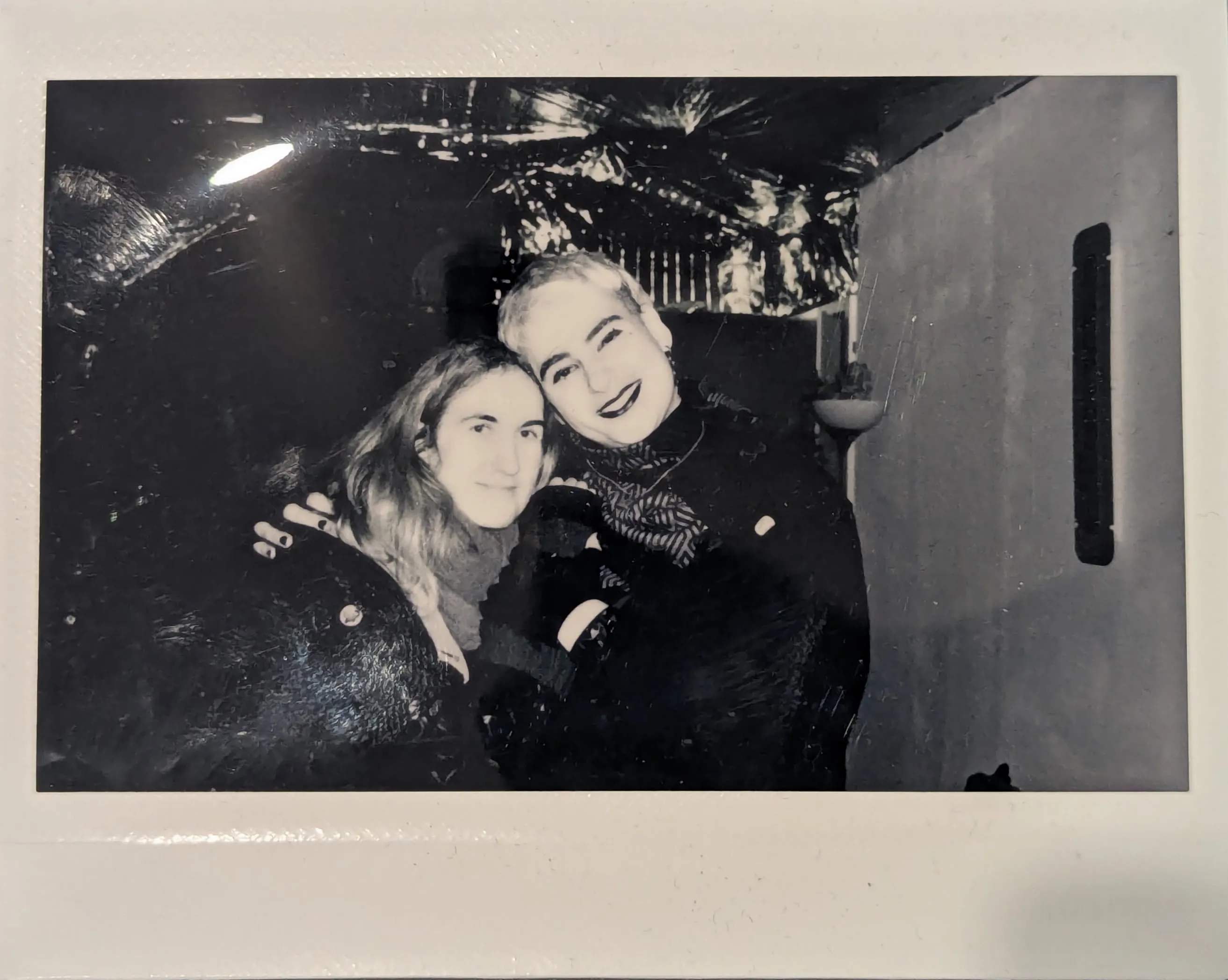
The last character in our group was Wisp, a tragic person that nobody was ever able to remember and my primary relationship. She moved through the world completely on her own, isolated from any meaningful emotional connection. With no real past and unable to build a future, she struggled with intense loneliness. She represented the present, as she was forced to live in the moment every day.
Our characters had a romance, with Ostinato having foreseen she would be xer one true love. Being one of the few people on the ship who could even know her name, she immediately threw herself at xer and they quickly fell for each other. We had dates in the dark ship, holding hands and looking at the slowly shrinking Earth together. Fearing being forgotten again, Wisp clung on tightly. The two got matching tattoos, took photos together, and avoided talking about the future.
It was still doomed, of course.
The relationship peaked with my throwing Wisp a surprise birthday party, an event she hadn’t had anyone to celebrate with in years. As Ostinato sang happy birthday xhe started to forget her name, and she got increasingly desperate. It came to a head after we were thrown in the Time Prison together by Cinder, the closeness of which erased her existence from Ostinato’s memory for good. She cried and begged me to remember, but I only said sorry over and over.
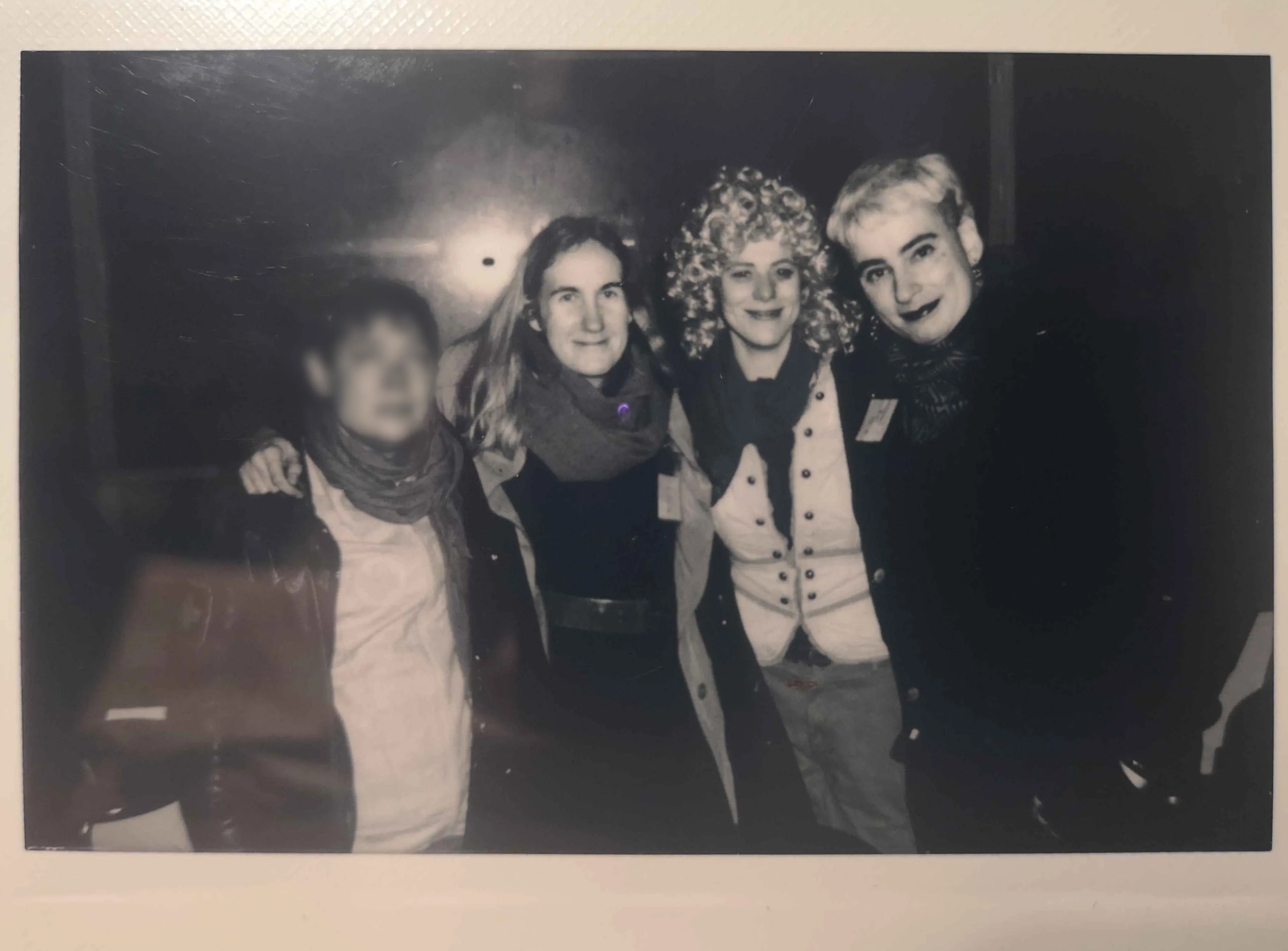
The Time cluster survived, in the end. We were drawn together as outsiders, but that wasn’t enough to hold us together by itself. All our characters hurt each other immensely, but despite that pain still managed to forgive and forged tight bonds.
For Wisp, Ostinato never remembered xer lost one true love. But as the characters grew over the course of the game, xhe let something new bloom in its place. In the end they held hands on the new world, uncertain where things were going but open to seeing where it would go.
Cinder managed to let go of her past, and was ready to see whatever the future may bring.
For the final confrontation of Ravel and the monster, we broke the previous vision and Ostinato refused to run. Instead xhe brought the other members of the cluster, and when Ravel somehow survived, we had a group hug and cried together.
“I… I can’t stop you from placing the final puzzle piece. But I don’t want to abandon you to die! I won’t leave you, but if you choose this I won’t stop you either,” Ostinato told Ravel in resignation.
He replied, “I know. But this is going to happen- we both saw it, and know how it must go. I want this. I need this to make sense of everything.”
“Will you two stop talking about death?! Please no more prophecy talk at the dinner table, I’m trying to eat here!” Cinder said to both of them in exasperation.
The Others
I had several connections outside the cluster, some prewritten and some that organically developed through play. There are too many to give a full accounting of, but I really enjoyed playing with Silver, Dawn, Foxfire, Elegy, Tidal, Shear, Solstice, and others.
One that was really impactful was Glade, a character who was a member of the crew on the ship’s final voyage, enmeshed in a messy polycule with her colleagues. She was the person who helped everyone else, being there for everyone while downplaying her own struggles.
Ostinato was the only one who saw her pain, and knew that she wouldn’t survive the voyage. It was really fun playing on the concept of determinism, as xhe knew the warnings wouldn’t help- but did them anyway because that was what was predicted. Glade kept on coming back to me with different interpretations of what Ostinato said, always missing that the oracle was speaking literally. Her partner Alizarus also was concerned but ended up dismissing Ostinato’s prophecy, insisting xhe was crazy and jealous.
I wasn’t there when Glade killed herself, and I also missed the funeral afterwards. During it, the player of Glade was apparently inside a casket telling her friends and partners mourning her how it was their fault.
Ostinato only learned of Glade’s death when at the mid-point of the game Alizarus appeared out of nowhere, sobbing. He looked me in the eyes and said I was right and she was gone. I held him as he cried as he whispered he should have believed me.
Later on, Ostinato went down to the small altar in the hanger. Like xhe foresaw, Glade’s photo was there with flowers and a small candle. What I didn’t foresee was Alizarus’s photo next to hers, another one of the tragic deaths of this voyage. In the end, the polycule had only one left.
Finale
Overall, I really enjoyed this game. It was a very intense experience for sure, but I really enjoy this form of storytelling. LARP lets me explore things that I couldn’t otherwise, by becoming another person for a little while. Each game teaches me something about myself and of how I can see the world.
In the case of Blankspace, I wanted to explore parts of myself involving struggles with mental health and anxiety of the future. The characters weren’t driven by illness, but their struggles still provided something I find meaningful.
Despite the game being psychological horror, I still had agency in the direction of Ostinato’s story. I made a conscious effort to be open to growth and steered towards hope when it made sense. I’m glad my character and their cluster survived to see their new world.
Our real world of course is far messier and the stories of our lives more complicated, though hopefully less dramatic. I am taking this game as a reminder that while the world can get really dark, everyone can find a path to growth and healing if given the opportunity.
I hold the hands of my newly forged family, and stand against the inevitability I fear. I have faced darker paths within the depths of space, and I am not going to let destiny rule me now.
My predictions are only as real as I let them. I let my thoughts of the future go in the wind, and just appreciate the present slowly turning into the past.